Science is at its most powerful when children can experience it, not just read about it.
A well-designed science workshop can transform a classroom topic into something students can investigate for themselves. But with so many STEM activities, how do you choose a workshop that genuinely supports what your students are learning?
The best starting point isn’t the experiment itself. It’s the learning you want to achieve. Here are five questions to consider when choosing a science workshop for your class.
- What are your current learning objectives?
Start with your curriculum. What concepts are your students currently exploring? What questions are they asking? And which ideas would become clearer if students could investigate them practically?
For example, a unit on sustainability can become an opportunity to investigate renewable energy, water filtration or environmental challenges.
When a workshop connects directly with classroom learning, it becomes much more than a special activity. It helps students apply, reinforce and remember what they have learned.
- Is the workshop appropriate for your students’ age?
A successful science experience should challenge children without overwhelming them.
For younger learners, science begins with curiosity.
Why does something float?
Where does a shadow come from?
Why does the weather change?
What happens when we mix two materials together?
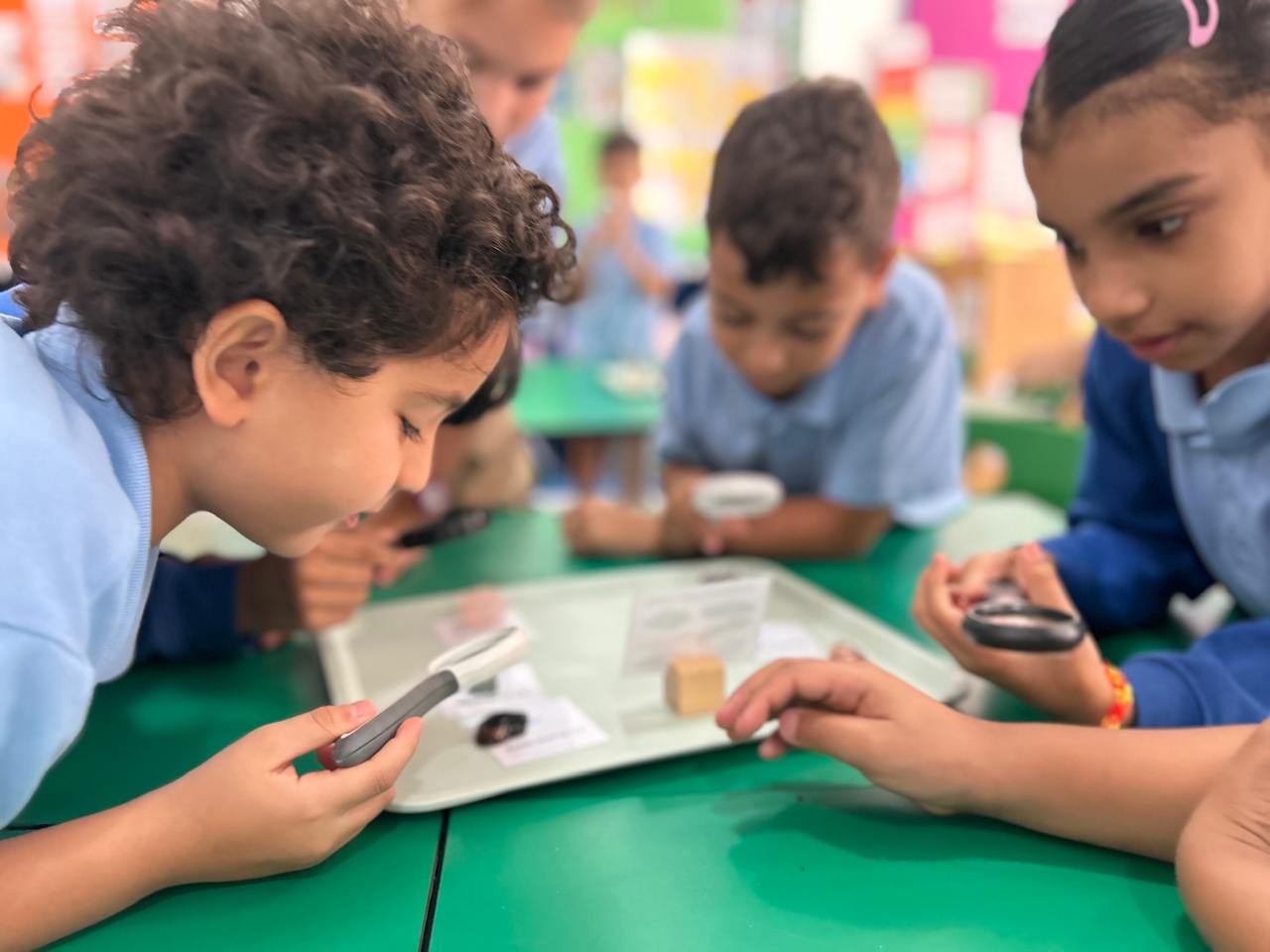
Hands-on activities allow Early Years children to explore these questions through observation, play and discovery.
As students progress through primary school, investigations can become increasingly sophisticated. They can make predictions, compare results, solve problems and begin explaining why something happens. The science concept may sometimes be similar, but the way children investigate it should evolve with their age and abilities.
- Does it encourage students to investigate rather than simply watch?
There is an important difference between a science demonstration and a hands-on science experience. Watching an exciting experiment can certainly capture children’s attention, but doing science themselves creates something more powerful.
Students can ask questions, make predictions, test ideas, make mistakes, adjust their thinking and try again. That shift is important because science education isn’t only about acquiring scientific knowledge, it is also about developing curiosity, problem-solving and confidence.
A great workshop should therefore give students plenty of opportunities to become the scientists themselves.
- What skills do you want students to develop?
A well-designed investigation can encourage students to communicate ideas, work collaboratively, think critically and solve problems.
Let’s imagine, for example, a group of students being challenged to design a structure. They need to decide which materials to use, discuss different ideas, build their solution and test whether it works. If their first design fails, they need to understand why and improve it.
The activity might begin as a lesson about structures, but students are also practising collaboration, creativity and communication. These skills extend far beyond the science classroom.
- Can the workshop complement your school’s curriculum?
Schools across UAE follow different curriculums and teach topics at different points during the academic year.
Teachers can share their current science units and learning objectives so the workshop can then be adapted to complement what students are already exploring in class.
At Let’s Discover, our portfolio includes hands-on science experiences covering various topics, but we also recognise that a school’s learning objectives may not always fit neatly into an existing workshop. Therefore, we can work with the schools to build a workshop around a particular topic or learning objective.
From learning science to experiencing science
Children are naturally curious. They want to understand how the world around them works.
A great science workshop builds on that curiosity. It shouldn’t simply provide students with more information, but it should give them an opportunity to question, investigate, experiment and discover.
So, when choosing your next science workshop, start by asking:
“What do I want my students to discover?”
The answer will usually lead you to the right experience. Because sometimes the best way to understand science is simply to Let’s Discover it together.