Why students remember our science workshops?
Educational research consistently demonstrates that active participation enhances both understanding and long-term retention. When students predict, test and investigate, they engage multiple senses and create stronger cognitive connections to the concepts being explored.
Children are eager to understand the world around them and frequently ask questions:
- Why do some objects float while others sink?
- How is a rainbow formed?
- What do plants need to grow?
Hands-on learning provides students with the opportunity to explore these questions through discovery, rather than simply being given the answers.
From Passive Learners to Active Investigators
Traditional teaching methods often position students as recipients of information. Hands-on learning, on the other hand, places them at the centre of the learning process.
By making predictions, conducting investigations and drawing conclusions, students develop a range of skills that extend far beyond science:
- Critical thinking
- Problem-solving
- Observation and analysis
- Communication
- Collaboration
- Creativity
Making Curriculum Concepts Meaningful
Many scientific concepts can appear abstract when introduced within the classroom. Practical activities help bridge this gap by transforming theory into understanding. Whether students are exploring forces and motion, states of matter, electricity or farming, hands-on investigations enable them to connect concepts with real-world experiences.
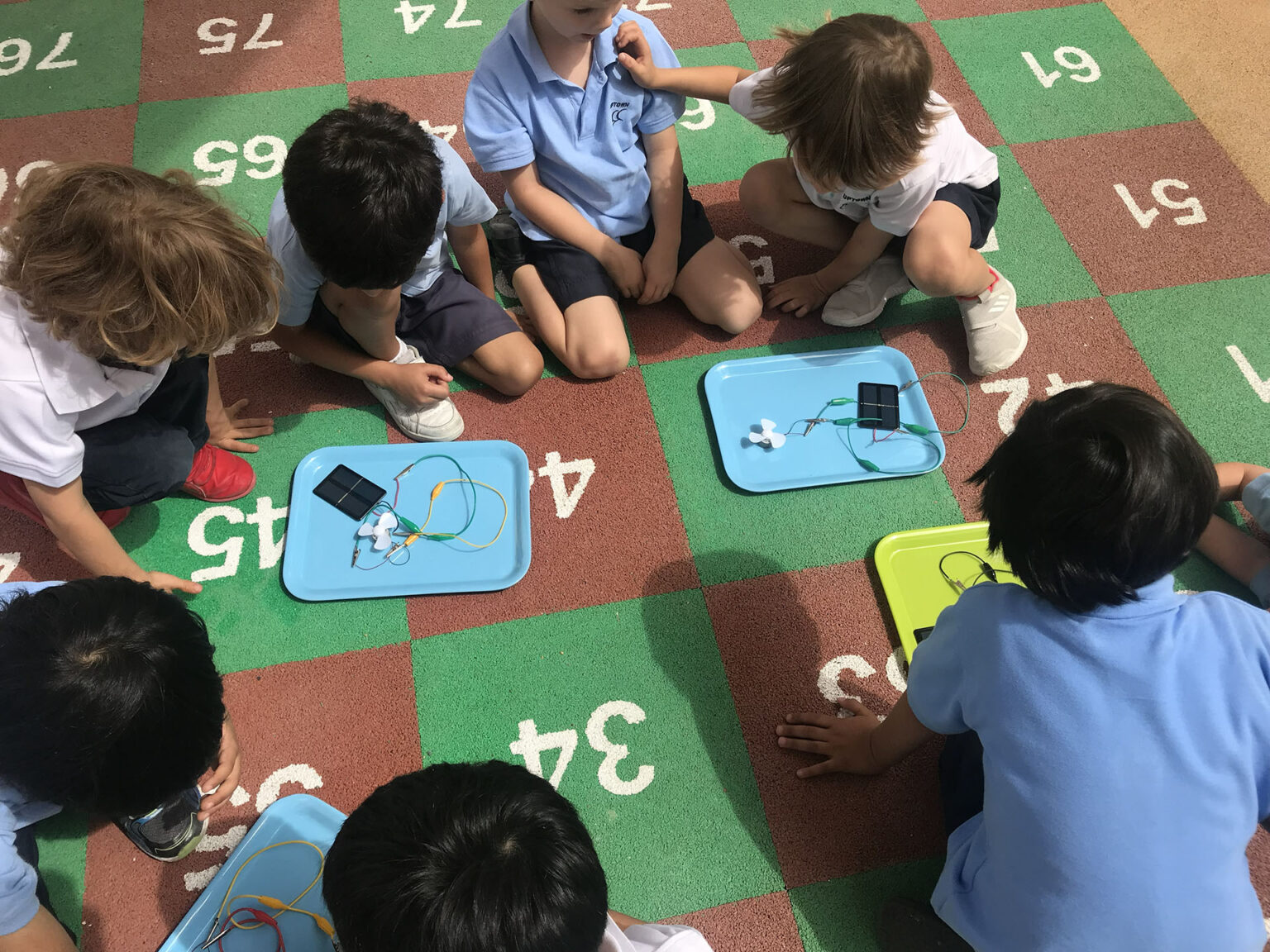
Students are significantly more likely to retain knowledge when they observed a chemical reaction, constructed a working circuit, or tested a scientific hypothesis themselves. These experiences create lasting memories that reinforce classroom learning long after the lesson has ended.
Building Confidence Through Exploration
Meaningful learning requires students to take risks, ask questions, and explore new ideas. Not every prediction will be correct, nor every experiment will produce the expected result. However, it is often through these moments that the deepest learning occurs.
Students begin to understand that science is not about having all the answers; it is about asking thoughtful questions, testing ideas, evaluating evidence, and learning from outcomes.
Bringing Science to Life
At Let’s Discover, we believe that science should be experienced, not observed. Our workshops are carefully designed to complement school curricula while providing students with meaningful opportunities to explore scientific concepts through hands-on investigation and inquiry-based learning.
By transforming classrooms into interactive learning environments, we help students connect academic concepts with the world around them, fostering deeper understanding, greater engagement, and a genuine enthusiasm for learning.
Because when children experience science for themselves, they do more than learn it—they start loving it.
And when they love it and understand it, they will remember it.