
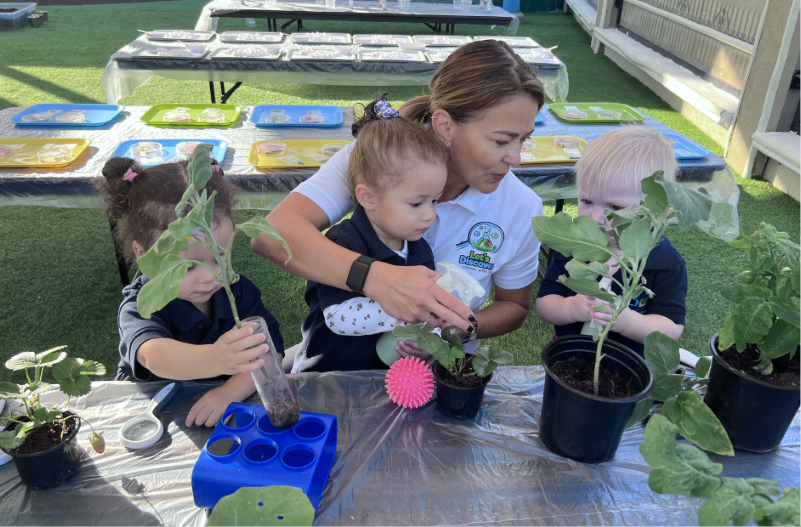
When we talk about STEM education, we often associate it with older age groups; however, its most important foundations are established much earlier. The early years represent a critical window in a child’s development, where curiosity, creativity, and cognitive growth are at their highest. Introducing STEM concepts at this stage supports the development of essential thinking skills.
Inspiring Curious Minds
Young children are naturally inquisitive and their constant questioning (Why? How? What if…) reflects a natural desire to understand the world around them. Well-designed STEM activities build on this curiosity, encouraging children to explore, question, and discover.
Learning Through Exploration and Play
In early childhood, learning is most effective when it is active and experiential. Exploration, sensory engagement, and play-based activities are fundamental to how young learners make sense of new concepts. Hands-on science experiences align seamlessly with this approach, enabling children to experiment with materials, observe changes, and understand cause-and-effect relationships in an engaging way.
Early exposure to STEM supports the development of key skills like problem-solving and critical thinking, observation and creativity. These foundational abilities extend beyond science and contribute to a child’s overall cognitive and social development.
Building Confidence and Positive Attitudes Toward Science
Early STEM activities play a crucial role in shaping children’s confidence. When students engage in enjoyable learning experiences, they are more likely to:
- Feel confident exploring new ideas
- Develop resilience when faced with challenges
- Maintain interest in STEM subjects as they progress through school
Conclusion
STEM education begins the moment a child starts to explore and make sense of their environment. By providing meaningful, hands-on learning experiences in the early years, educators lay the foundation for confident, curious, and capable learners.
Early experiences in STEM shape not only how children learn, but how they perceive the world for years to come.